Showing posts with label Article. Show all posts

Mengendalikan Serbuan Kecoa

Posted on June 29, 2016 by Cak RaYZa

Hi sobat blogger... Apa kabarnya? Semoga sehat-sehat selalu...

Kali ini saya mau sharing mengenai serangan kecoa (kecoa yang kecil-kecil) yang hampir tak ada habisnya di kamar kos saya.
Pada awalnya saya pindahan ke kamar kos saya yang terakhir dan mungil ini hampir tidak ada keluhan sama sekali, malahan terasa nyaman walaupun kamarnya berukuran sangat kecil. Jadi ga bisa terima tamu deh.. Namun dengan fasilitas AC (walaupun di luar kamar, tp kadang harus pake selimut), WIFI (sekarang sering gangguan), kamar mandi ber shower airnya panas dan dingin (maknyus), parkir motor yang luas dan insya Allah aman, serta bangunan tinggi insya Allah ga kebanjiran kalo pas banjir. Dari sekian banyak fasilitas tersebut yang paling saya suka adalah dekat dengan kantor (kalo berangkat kesiangan masih bisa ngejar absen).
Nah, beberapa bulan setelah saya menempati kos di daerah Jakarta Pusat ini, ada hal yang membuat saya geli dan resah, munculnya kecoa kecil yang entah darimana asalnya. Pada awalnya saya biasa aja, dan mengira masuk melalui ventilasi pintu pasti ini makhluk. Saya berpikiran untuk ke toko bangunan beli ram kawat yang agak rapat untuk menutup ventilasi, dan supaya udara bisa tetap bersikulasi. Lalu saya pasanglah, dan melihat perkembangan. Dan ternyata tidak berpengaruh terhadap keberadaan kecoa tersebut. Waduh..


Mungkin masuk lewat celah pintu, saya lari ke minimarket (ga lari jg kalii...) beli kapur tulis, ah kapur anti serangga maksudnya. Saya coret-coretlah dinding dan pintu kamar kos.. Dan ternyata ga ada hasil juga.. Duuuhh...

Setelah percobaan pertama gagal sambil menanti ide-ide berikutnya, saya membunuh itu makhlul dengan pestisida semprot, yah beberapa merk juga telah dicoba, namun walaupun yang nampak udah tewas, kawan-kawannya masih tetap aja muncul. Saya coba juga dengan pestisida elektrik, ga mempan juga, malah alatnya dipake nongkrong ama dia.. Wah ternyata kamu ga punya indra penciuman yah, malah ngece..  Sroot.. sroot.. akhirnya saya semprot lagi, tepar kau...

Wah kacau ini kalo terus semprot gini, kecoa ga hilang malah meracuni empunya.. Akhirnya saya menjelajah internet, bertanya pada mbah gugel  gimana mbah cara ampuh basmi kecoa? Eh banyak artikel yang menyarankan buat perangkap dari botol bekas, yah nothing to lose saya buat. Bahan juga melimpah, karena saya sering konsumsi air mineral kemasan botol. Dag dog dug sreet, nah akhirnya jadi juga sesuai artikel yang saya baca. Pasang, ditinggal semalem.. Eh lumayan dapag 3 butir, emangnya apaan butir haha.. Ketiganya saya biarkan dalam perangkap, selang beberapa lama saya cek lagi, lha kok berkurang, usut punya usut ternyata si kecoa bisa keluar lagi dengam perjuangan yang gigih, asseemm gagal maning son..

Karena hampir putus asa, saya jadi berniat pindah kos (walaupun sangat berat cari ganti yang setara), tapi daripada hidupku ga sehat. Hiks...

Sembari cari info kos, akhirnya saya tanya lagi sama simbah? Gimana mbah yang kemarin gagal total, ada cara lagi ga..? Setelah baca-baca sekian ratus (lebay) artikel, ada cara yang mudah bagi saya untuk mencoba yaitu...
Beli sabun mandi (jangan yang cair) yang batangan aja biar murah.. Lalu potong kecil-kecil pake pisau (tidak disarankan pake gigi ya..). Setelah dipotong taruh di beberapa sudut kamar dan lemari. Setelah semalam mengamati, serangan kecoa pun berkurang drastis. Alhamdulillaah wa syukurilah.. Sampe sekarang sih masih manjur dalam pengendaliam serangan kecoa. Mari kita lihat beberapa hari kedepan.. Smoga aman sentosa.

Demikianlah sharing saya bersama kecoa kecil (damn you..), semoga dapat memberi inspirasi buat agan-agan dunia maya. Kurang lebihnya mohon maaf ya..

Read More...!

Dirgahayu Kemerdekaan Republik Indonesia ke-64

Posted on August 16, 2009 by Cak RaYZa

17 Agustus 2009 adalah hari Kemerdekaan RI yang ke-64

Tema yang diambil dalam HUT RI kali ini adalah
"Dengan Semangat Proklamasi 17 Agustus 1945, Kita Tingkatkan Kedewasaan Kehidupan Berpolitik dan Berdemokrasi serta Percepatan Pemulihan Ekonomi Nasional Menuju Indonesia yang Bersatu, Aman, Adil, Demokratis, dan Sejahtera"

Merdekaa....!!!!

Marilah kita bersyukur kepada Allah SWT karena masih diberikan waktu untuk menikmati dunia yang fana dan sementara ini. Dan beryukur karena negara kita telah diberi kemerdekaan yang telah kita hirup selama ini. Tidak lupa berterima kasih kepada para pejuang yang telah gugur membela kehormatan bangsa ini.

Semoga di usia ini negara kita dapat semakin tumbuh dan berkembang di segala aspek serta dapat mensejajarkan diri dengan negara-negara maju di Asia atau bahkan di dunia..

Paling tidak dapat menjadi lebih baik dari tahun lalu... Amiin..
Read More...!

Berita buruk....

Posted on August 14, 2009 by Cak RaYZa

Met pagi sobat².......

Pagi-pagi liburan ini seperti biasa saya nyalain komputer buka internet, browsing sana sini dan akhirnya ku mengecek blog ini. Mata langsung tertuju pada shoutmix , sebuah kotak yang berisi pesan-pesan dari para sahabat namun tulisan pada baris paling atas, dengan pesan yang cukup pendek tapi sangat penting, terlihat seperti pesan yang kurang menyenangkan, padahal baru beberapa hari kunikmati tapi kok begitu cepat berlalu....

Akhirnya kubaca pesan itu, ternyata dari bang kritikus (lagi) yang kemaren memberitau kabar baik yaitu blog aku udah terbebas dari PR N/A (Not Available), sekarang beliau memberitau sebaliknya, blog aku kembali ke PR N/A.

Kaget ? Tidak begitu....

Menyesal sih iyah.... haha...

Padahal udah kujaga- jaga blog ini agar tetap ber PR. Yaah mungkin karena keasyikan maen-maen PTR yang emang baru dapat job. Jadi semua job ku hajar, tanpa melihat lagi ada beberapa link nyangkut di halaman depan.

hmmm... jadi momen berikut ini ku jadikan sebagai test kedua mengatasi PR N/A, semoga kali ini bisa mengetahui dimana celah nya kenapa si om gugel kok membantai PR ku ini....

Sekian dari saia... Bagi sahabat yang mengalami nasib yang sama dengan saia, jangan patah semangat dulu, pasti bisa kok diatasi.... Bagi yang mengalami kenaikan PR saya ucapkan selamat deh, dijaga yaa...


Read More...!

Playin Poker

Posted on August 8, 2009 by Cak RaYZa

Did you ever play poker?

Poker is a card game that is fun and very popular. Now we can play poker online, play with people all over the world. But in this case we are not talking about gambling. Because I play poker for a time as any to spare.


To learn more about poker, there is a forum to discuss all of that, the "flopturnriver". Forum contains articles on various popular, various tools, and some poker community that you can follow.

If you find the best marketing code, this forum is to provide a quote Pokerstars bonus code, which provides added value as a large amount of initial capital you play poker. After you register and make your first deposit, you should use the Pokerstars bonus codes to add a bonus to the first deposit.

For more information about the Poker Stars marketing code you should be referred to the forum. And once again, this is not intended to gamble.
Read More...!

Photography

Posted on August 7, 2009 by Cak RaYZa


Photography is a hobby that requires a camera. Once we have a camera to search for free items that we want to snap. We can find photographs in which objects are, for example, on the mountains, on beaches, in a building, or in a particular event according to the photographer desires.

This time we will talk about the digital camera. There are 2 types of camera is pocket camera and SLR camera. Poket camera is very easy to use and easy storage. This type is suitable for beginners and everyday use, because the settings are easy and automatic so that it does not need to have special expertise in their use.

Second type of camera is a digital SLR camera. This type features a very comprehensive than pocket camera. Besides having a variety of lenses that are used as needed. This type of camera for photographers who are experts. Use of this camera is very difficult, because all the settings manually. Settings ranging from the size of the image, lighting, to the type of lens used.

Here are some of the camera brand that is quite popular, like Canon EOS, Nikon Coolpix, Canon Powershot and Panasonic Lumix. Please read the buyers guide to see more information.
Read More...!

Investment for a Bright Future

Posted on July 14, 2009 by Cak RaYZa

Are you investing?

Investment is to save part of the property used in the future. Investment can be made with how to save money in the bank such as deposits or save and buy the goods that will have a selling price is higher in the future, such as houses, land, and gold. Most people may prefer to save money in the bank, because of security reasons and can also be taken at any time if needed.

However, if you see the condition of the world economy at this time, save money in the bank s not a good solution for investing. Because many banks are already bankrupt and disappointing the customers. While the government can not help much to resolve the issue.

After reading the explanation above, this time a very good investment is a purchase of gold. Why gold? Because the price of gold from time to time did not go down, it is rather increasing. In addition, gold is the most liquid investment among other investments and can be exchanged for cash at any time you need.

This time investment is not only done manually with a visit to certain institutions but can be done online in a way. One of them you can visit www.goldcoinsgain.com. On the site that you can clearly get information about investment gold, buy gold, the kind of gold coins, and gold prices. Also provided the market analysis to learn more about the development of the price of gold.

In this investment you are given a quote to buy gold coins or buy gold bullion. Selection is based on the amount of funds you will invest and needs you want. For more information you can read on the site. Have the form of gold coins, interesting and easy to be saved, does not require a space that is too broad and not too visible to others.

Read More...!

Gaming solution.

Posted on July 8, 2009 by Cak RaYZa

If you ever play games? Most probably the answer is "ever". Because the game has known since first starting from children to adults who like it a lot.
Nowadays many games have been developed around us. As a gamer must for us to follow the development is not so-called outdated.

Starting from the game console to pc game now bring great performance. Both each other to make the best game in the face of the earth.
Graphs that correspond with the reality of virtual sound akan not make us go from the bottom to finish playing.

At this time to purchase the device and the game is not difficult. Because we can buy it online. Such as the Shopwiki offer a full variety of game guide. And the page is provided to help guide you in making a decision, whether to purchase the handheld or console gaming, and there are some enhancements such as the game controller that will make you feel comfortable when playing certain games
and the address there is some explanation of the various console gaming brand with a full range of games that support it.

After open and learn from Shopwiki we will find out the extent to which development of the game at the moment. Following which the appropriate device with which we want.

Read More...!

Queen Biography

Posted on March 14, 2009 by Cak RaYZa

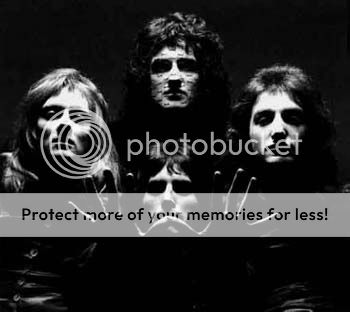
The enormously popular British band Queen epitomized pomp rock, with elaborate stage setups, smoke bombs, flashpots, lead singer Freddie Mercury's half-martial, half-coy preening onstage, and highly produced, much-overdubbed music on record.

Queen can be traced back to 1967, when Brian May and Roger Taylor joined singer Tim Staffell in a group called Smile. Staffell soon left to go solo, and the remaining two Smiles teamed up with Freddie Mercury (from a group called Wreckage) and later John Deacon. They played very few gigs at the start, avoiding the club circuit and rehearsing for two years while they all remained in college. (May began work on a Ph.D. in astronomy; Taylor has a degree in biology; Deacon, a degree in electronics; and Mercury had one in illustration and design.) They began touring in 1973, when their debut album was released. After a second LP, the band made its U.S. tour debut, opening for Mott the Hoople.

Queen's sound combined showy glam rock, heavy metal, and intricate vocal harmonies produced by multi-tracking Mercury's voice. May's guitar was also thickly overdubbed; A Night at the Opera included "God Save the Queen" rendered as a chorale of lead guitar lines. (Until 1980's The Game, the quartet's albums boasted that "no synths" were used.) Queen's third LP, 1974's Sheer Heart Attack, featured "Killer Queen," its first U.S. Top 20 hit. The LP also became its first U.S. gold.

Heavy-metal fans loved Queen (despite Freddie Mercury's onstage pseudo-dramatics, which had more to do with his admitted influence Liza Minnelli than with Robert Plant), and the band's audience grew with its breakthrough LP, 1975's A Night at the Opera. It contained the six-minute gold "Bohemian Rhapsody" (Number Two, 1976), which featured a Mercury solo episode of "mama mia" with dozens of vocal tracks. "Bohemian Rhapsody" stayed at Number One in England for nine weeks, breaking the record Paul Anka had held since 1957 for his "Diana." The promotional video produced for it was one of the first nonperformance, conceptual rock videos.

Queen has had eight gold and six platinum records; through the mid-'80s only its second LP and the 1980 soundtrack to the film Flash Gordon failed to sell so impressively. The group's U.S. Top 40 singles include "Killer Queen" (Number 12), 1975; "Bohemian Rhapsody" (Number Nine), "You're My Best Friend" (Number 16), "Somebody to Love" (Number 13), 1976; "We Are the Champions" b/w "We Will Rock You" (Number Four), 1977; "Fat Bottomed Girls" b/w "Bicycle Race" (Number 24), for which the group staged an all-female nude bicycle race, 1978; "Crazy Little Thing Called Love" (Number One), 1979; "Another One Bites the Dust" (Number One), 1980; "Under Pressure" with David Bowie (Number 29), 1981; "Body Language" (Number 11), 1982; and "Radio Ga-Ga" (Number 16), 1984. At first their hits were march-like hard rock, but in the late 1970s and early 1980s the group began to branch out. In 1980 they released The Game which featured two big hits in the rockabilly-style "Crazy Little Thing Called Love" and the disco-style "Another One Bites the Dust," a close relative of Chic's "Good Times," that went to Number One pop and R&B. The Game became Queen's first American Number One album.

In 1981 Taylor released a solo album, Fun in Space, and later in the year the band recorded with an outsider for the first time, writing and singing with David Bowie on "Under Pressure," included on both their platinum Greatest Hits and Hot Space. One side of Hot Space was typically bombastic rock, while the other contained funk followups to "Another One Bites the Dust." Fans were relatively cool to Hot Space; it did not go platinum. Queen's next LP, The Works (Number 23, 1984), marked a return to hard-rock form. It contained the nostalgic "Radio Ga-Ga."

Queen ceased to be a commercial force in the States; its next two LPs didn't even go gold. Yet all over the world the group retained its regal status. The gold Innuendo, which went to Number 30 here, shot to Number One in Britain in early 1991. By then rumors were rampant that Mercury was ill with AIDS, something the group continually denied. That November he released a statement from his deathbed confirming the stories; just two days later he died of the disease in his London mansion at age 45.

On April 20, 1992, the surviving members of Queen were joined by a host of stars — including Elton John, Axl Rose, David Bowie, Def Leppard, and many other admirers — for a memorial concert held at Wembley Stadium that was broadcast to a worldwide audience of more than 1 billion. The concert raised millions for the Mercury Phoenix Trust, an AIDS awareness and education fund established by the band members and their manager, Jim Beach. Ironically, around the time of the Wembley concert, Queen was enjoying its greatest American popularity in years, thanks to the memorable scene from the movie Wayne's World, in which main characters Wayne (Mike Myers) and Garth (Dana Carvey) and buddies sing along to "Bohemian Rhapsody" as it blares on the car radio. The rereleased single soared to Number Two. A posthumous Mercury solo album was released in 1992.

In 1993, May released his second solo album, Back to the Light, and continued recording solo and with the Brian May Band. Roger Taylor recorded three albums with a sideline band, the Cross, which began in 1987; he eventually resumed his solo career. In 1995 Queen finally completed its swan song Made in Heaven (Number 58), which features vocals recorded by Mercury during the last year of his life. In 1996 a statue of the singer was unveiled in Montreux, Switzerland. In 1998, a box set of their first eight LPs entitled Crown Jewels was released.

Queen was inducted into the Rock and Roll Hall of Fame in 2001. Compilations, DVDs and archival live recordings continued to emerge throughout the new millennium. The Queen name was brought back in 2005 as "Queen + Paul Rodgers," the former lead singer of Free and Bad Company. Return of the Champions, a 2005 double disc on the Hollywood label, documents a show where Rodgers joined Brian May and Roger Taylor at the Hallam FM Arena in Sheffield. An album with the Rodgers-fronted lineup, The Cosmos Rocks, was released in October 2008.


Taken From : http://www.rollingstone.com/artists/queen/biography
Read More...!

Bee Gees Biography

Posted on March 7, 2009 by Cak RaYZa


Barry, Maurice, and Robin Gibb---together as brothers all their lives, and as a singing group nearly as long. Their career began when the three gathered in a bedroom in their home in Manchester, England, and began working out the natural harmonies which today are one of the hallmarks of the Bee Gees' sound. They worked these out so well that their mom believed her sons' harmonizing was actually a radio playing in the next room. Father Hugh Gibb, a bandleader in his own right, and mother Barbara Gibb, a former professional singer, knew their sons possessed special talents. Maurice has said that their dad envisioned them as a children's version of the Mills Brothers, an American family quartet extremely popular in England and the US from the thirties through the sixties.
The Mills Brothers were known for their tight, beautiful harmonies. So it was then that the Rattlesnakes (Barry, age 9, and Robin and Maurice, age 6) began performing at the local Manchester, England, cinemas between films. A little later, they began calling themselves "Wee Johnny Hays and the Blue Cats", though no one seems to remember exactly why! In 1958, Hugh and Barbara decided to look for "greener pastures" (and warmer climates!). They moved the entire family (now comprised of Hugh and Barbara, and older sister Leslie, Barry, Robin, Maurice, and baby brother Andy) to Australia, settling in the Brisbane area.
Once settled in Brisbane, the Brothers began pursuing their singing and songwriting careers in earnest, each vowing to the other that success, together, was what they wanted. They played at the local beach resorts, racetracks, and on local radio and TV, having caught the attention of local DJ Bill Gates (no, not the Microsoft one). In March, 1960, the Brothers were given their own half-hour weekly television show in Brisbane (remember, Barry was still only 13, and the twins were 10!). It was at about this time, at the suggestion of Bill Gates (notice his initials), that the Brothers became first the BG's (for Brothers Gibb), and soon after the Bee Gees. In 1963, they signed their first recording contract with Festival Records in Australia. They released their first Bee Gees'-written single, "Three Kisses of Love", and wrote songs for other artists.
Still, their careers weren't progressing as they'd hoped. Despite releasing a dozen singles, none were hits. Yes, the Bee Gees had been voted the top songwriting team in Australia in both 1965 and 1966. Yes, they had been named Australia's best group in 1966. But there were no hits. Ultimately, the Brothers decided to return to England, where the music scene had exploded with the Beatles, the Rolling Stones, Cream, and so many others. In January, 1967, the Gibb family sailed back to Great Britain. While on this journey, the Bee Gees finally got their first #1 in Australia with "Spicks and Specks". They had sent ahead to England demo tapes of most of their Australian material, including "Spicks and Specks", to NEMS Enterprises, headed by the Beatles' manager, Brian Epstein. Unbeknownst to the Brothers, Epstein and his associate, Robert Stigwood, listened to the tapes, and Stigwood was more than interested. Nearly as soon as they were off the ship in England, Stigwood was calling on them. In short order, the Brothers were signed to a five-year management contract with Stigwood. After adding Vince Melouney (guitar) and Colin Petersen (drums) to the group, the Bee Gees headed for the studio to record "Bee Gees First", which was released in mid-1967. Their first single, "New York Mining Disaster 1941", and the follow-ups "Holiday" and "To Love Somebody", quickly gained them the beginnings of the international recognition they'd been seeking so long. In May of 1967, they appeared on "Top of the Pops", Britain's most important rock and roll showcase. The Bee Gees became the hottest new group in London.
By late '67, the Bee Gees' second album, "Horizontal", had been recorded and released. From this album came the UK chart-topping "Massachusetts". In 1968 came the "Idea" album, with the hit singles "I Started A Joke" and "Gotta Get A Message To You". In the space of a little more than one year, the Brothers Gibb had released three albums, had six hit singles, had made their American TV debut, and were the toast of London.
By 1969, the Bee Gees had recorded their two-disk concept album, "Odessa". The album was released in a lush, red velvet cover, which was appropriate for an album filled with songs with lush arrangements and orchestration. However, the stress of writing, recording, and just being together so much was beginning to take its toll. As is so often the case when huge success comes quickly, dissension had set in among the Brothers and the rest of the group. Massive disagreement over what was to be the "A" side of the first single from "Odessa" --- Barry wanted "First of May", while Robin felt equally strongly that "Lamplight" should be the "A" side --- resulted in Robin's departure from the Bee Gees to pursue a solo career. Vince Melouney, and soon Colin Petersen, also left. The pressures of that "first fame" --- fans, girlfriends, people telling each brother that he didn't need the other two for success, and lots of money---combined with what Maurice once stated simply was "immaturity" to drive the Brothers apart (remember, this was 1969---Barry was only 22, and Robin and Mo were still just 19!).
Robin went into the studio, and, after doing virtually everything for the album (writing, producing, singing, arranging), released "Robin's Reign". The single from the album, "Saved By The Bell", achieved notable success in Europe. Meanwhile, Barry and Maurice kept on as the Bee Gees, releasing the album "Cucumber Castle" and appearing (with comedian Frankie Howerd, Eleanor Bron, and others) in a British TV special of the same name. (Author's note--if you have an opportunity to see "Cucumber Castle", don't pass it up. The humor and puns are typically British and typically Bee Gees, and Barry as the King of Cucumber and Maurice as the King of Jelly are priceless. My sides ached from laughing!) Ultimately, though, Barry and Mo parted company as well. The split was to last 15 months. The time the Brothers spent apart allowed them to gain maturity, a better understanding of themselves, and a better perspective on the magic produced when the three of them were together. The healing began when Robin called Barry and suggested that they should try to work things out and work together. As the three came together, both professionally and personally, they began putting together what became "Two Years On", the next Bee Gees album. That album contained "Lonely Days", which became the Brothers first #1 single in the US, and their first gold US single. The release of the album "Trafalgar" later in 1971 further solidified the Brothers. That album contained "How Can You Mend A Broken Heart", a song about the breakup and reconciliation, which also quickly went gold and shot to #1 in the US. The 1972 album "To Whom It May Concern" produced the single "Run To Me", another huge hit. However, the 1973 album "Life In A Tin Can" produced no major hits, and the Brothers were becoming dissatisfied with their direction. Their label, and most everyone else, weren't particularly happy with their direction, either---the Bee Gees were felt to have "run their course". Meanwhile, Eric Clapton had recorded his phenomenally successful "comeback" album "461 Ocean Boulevard" at Criteria Studios in Miami, Florida. Talking to Eric revealed that he had found the Miami-Criteria experience revitalizing and inspiring. Eric suggested that the Bee Gees might consider doing the same. Thus in 1974, the Bee Gees came to work with R & B-based Arif Mardin, who produced their next release, "Mr. Natural." While not a huge commercial success, "Mr. Natural" contained many new sounds (for the Brothers) and definitely showed the influences of their new people on their singing and songwriting.
In 1975, the Brothers returned to join Arif Mardin, this time at Criteria. Out of this collaboration came the major shift in direction of "Main Course". The album brought the Brothers closer to the R & B influences they'd always loved and felt, just when the music world was focusing on R & B dance music. "Main Course" was just that---a tremendous serving of Bee Gees rock and soul, including the "bridge to Criteria"-inspired "Jive Talkin'", "Nights on Broadway (during the recording of this Barry discovered his ability to sing in falsetto)", "Fanny (Be Tender With My Love)", "Wind of Change", and "Edge of the Universe". The Brothers Gibb were back on top, commercially and creatively, as "Main Course" went gold and platinum, both "Nights on Broadway" and "Jive Talkin'" shot to #1, and "Jive Talkin'" was a gold single. A change of record label in the US in 1976 meant Arif Mardin wasn't available to them for their next album, but the Brothers had learned well from him. 1976's "Children of the World" went gold and platinum, both "You Should Be Dancing" and "Love So Right" were gold singles, and "You Should Be Dancing" went to #1 as well. The album also included such songs as "Boogie Child", "Lovers", and "Can't Keep A Good Man Down". Yet amazingly the true heights were still to come.
For their next studio album, the Bee Gees chose to record at the Chateau D' Herouville (immortalized by Elton John as the "Honky Chateau"). At the same time, Robert Stigwood was
developing his movie about the dance culture in New York City, based on the article "Tribal Rites of the New Saturday Night". He needed music for the movie, and knew just where to find it. Thus the Bee Gees gave up the entirety of their studio album to that point---"More Than A Woman", "If I Can't Have You", "How Deep Is Your Love", "Night Fever", and, of course, "Stayin' Alive"---and "Saturday Night Fever" gained the music which propelled it into the stratosphere. The soundtrack to "SNF" became the best-selling album ever (a title it held until Michael Jackson's "Thriller" took over), and it remains the best-selling soundtrack album to this day. While their songs from "SNF" climbed the charts, the Brothers mixed and readied what was their first live album (and their next release), "Here At Last...Bee Gees Live!". "How Deep Is Your Love", their next single, went to #1 and went gold before the "SNF" movie was even released. "Night Fever" and "Stayin' Alive" both were #1 hits, and both went gold and platinum. "If I Can't Have You", written by the Brothers and as recorded by Yvonne Elliman, also was a #1 gold single. The "Saturday Night Fever" soundtrack album itself was #1 for 24 weeks, and at the time went gold and platinum 14 times over. "Saturday Night Fever" took the Bee Gees from being merely chart-topping stars (!) for the second time in their careers to absolute superstardom. It was in 1978 that the Bee Gees had the #1 single, the #1 album, and 5 songs (as artist and/or songwriter) in the Top 10 at the same time in Billboard, Cashbox, and Record World magazines. It was around this same time that the Brothers became based in Miami Beach, Florida, and began looking for a place for their studio to call home. They had already begun helping brother Andy achieve his own stardom, as "I Just Want To Be Your Everything" hit #1 in 1976. "Here At Last...Bee Gees Live!" went gold and platinum. The Brothers began work on the movie "Sgt. Pepper's Lonely Hearts Club Band" with Peter Frampton. The Bee Gees, or their music, were everywhere: movies, radio, TV, belt buckles, necklaces, school lunch boxes, notebooks, and more.
Unfortunately, with all this acclaim, the inevitable dark cloud peeked its head over their horizon. As the filming of "Sgt. Pepper" wore on, it became increasingly clear to all three that the film --- using only the music of the Beatles to advance the storyline, no dialogue --- was a dog. The Brothers begged to get out of the movie several times, but they had to remain. The film was pounded critically and at the box office, often because Robert Stigwood had dared to "defile", in critics' words, the Beatles' classic in such an off-beat way. The Bee Gees emerged from the film tired, but with their musical careers intact.
The Brothers went back to the studio, and from there emerged with "Spirits Having Flown", their critically-acclaimed 1979 classic. Filled with many musical styles, the Brothers showed the versatility of their songwriting. "Spirits" stayed at #1 for six weeks, produced the hits "Tragedy", "Too Much Heaven", and "Love You Inside Out", and pushed their 1979 stadium tour of the world to sold-out status.
Once the tour was finished, the Brothers took a breather to write and produce for other artists. While all three wrote for the album, Barry handled the production and sang on Barbra Streisand's wildly successful "Guilty" album (the most successful album of her career). Robin, meanwhile, produced other Gibb compositions for the album "Sunrise", by Jimmy Ruffin. The Osmonds were at the same time putting Maurice's producing talents to good use on their album "Steppin' Out". However, out in the pop music world, there were the beginning grumblings of those who said that disco music was "lightweight" and "insignificant". Anything which becomes extraordinarily popular, at least in the US, soon becomes a whipping boy for critics. Disco was no exception. The music and mainstream media began looking for its "whipping boy".
The next studio album for the Brothers became 1981's "Living Eyes". Once again, the album was stylistically very different from "Spirits", which preceded it. The album was by turns lush, raw, pounding, slick. It was good. Unfortunately, while the album was coming together for release, the media found its whipping boy --- or boys --- for disco, and they were aimed straight
at the Bee Gees. Despite the fact that the Brothers had produced and had danceable hits nearly three years before "Fever", despite the fact that the Bee Gees music was much more R & B than disco, and despite the fact that the Brothers Gibb had never embraced either disco fashion or its lifestyle, none of this mattered. Music media and DJ's from coast to coast laid the "blame" for disco squarely at the feet of Barry, Maurice, and Robin. This was the atmosphere into which "Living Eyes" was released. The music business was having none of it. "Living Eyes", and its single, "He's A Liar", were lackluster performers, to be charitable. In the face of the media hostility, and preoccupied with various lawsuits involving their label, RSO; their finances; and their management; the Bee Gees were ready for another break.
1982 found Robin and Mo working on writing and producing Robin's first solo album since 1970, the 1983 release "How Old Are You?". The album, and its single, "Juliet" , did well in Europe, particularly Germany. Another cut from the album, "Another Lonely Night In New York", achieved some success in the US. Barry was in the meantime producing an album of Gibb-brothers' compositions for Dionne Warwick, her album "Heartbreaker". That album, and the single of the same name, became Warwick's most successful. Barry followed this with producing Kenny Rogers' album "Eyes That See In The Dark", again an album of Gibb-brothers' penned songs. This album contained a tasty duet with Dolly Parton, the song "Islands In The Stream". "Islands" became a super smash hit, topping both the country and the pop charts. To this day, though, relatively few people realize just who wrote "Islands" --- the Brothers Gibb, who were then being roundly dismissed as disco lightweights by the media.
1983 also brought the release of "Stayin' Alive", the movie sequel to "Saturday Night Fever". The movie flopped badly, but it brought another couple of hits to the Bee Gees: "Someone Belonging to Someone", and the much more successful "The Woman In You". The music video made for "The Woman In You" is, certainly arguably, one of their best concept videos, and it featured (besides them) Cynthia Rhodes from the "Stayin' Alive" movie (and later, Penny in the movie "Dirty Dancing").
Still pursuing other projects, the Brothers wrote and produced the album "Eaten Alive" for Diana Ross, which was definitely an R & B album. Its single "Chain Reaction" gave Diana her biggest solo hit ever in the UK. Next on the plate for Maurice and Robin was the writing and producing of Robin's next solo album, "Secret Agent". Meanwhile, Barry recorded his solo album "Now Voyager", and starred in and co-produced the long-form concept film, also titled "Now Voyager", which accompanied it. The single "Boys Do Fall In Love" from Robin's album did become a minor hit, but the subsequent release of "In Your Diary" and "Secret Agent" stirred little interest. The single from "Now Voyager", "Shine Shine", was a modest Top 40 hit for Barry. As 1985 dawned, the material for Barry's second solo, "Moonlight Madness", instead later became part of the soundtrack for the movie "Hawks". Once again in the studio, Robin and Mo wrote and produced Robin's fourth solo effort, "Walls Have Eyes". This album included the single "Toys", which should have attracted major attention, but for a lot of reasons, it didn't.
It was time for a little rest, reflection, and redirection of the Bee Gees' own careers. Once again, the Brothers called upon Arif Mardin, and together they produced the 1987 release "E.S.P.". The album's first single, "You Win Again", was a major success, hitting #1 in many places. It was virtually ignored in the US, though, as were the many other mold-breaking songs on it, such as "This Is Your Life", "Crazy For Your Love" (author's note: the next time you hear Rod Stewart's 1991 "The Motown Song", compare the "doo-doo-doo-doo-doo-doo" opening to the opening of "Crazy For Your Love"), "E.S.P." and "Backtafunk". To radio stations (who of course never bothered to listen to "E.S.P."), the Bee Gees still equalled disco, and, of course, "disco sucked".
March of 1988 brought to the Brothers the tragedy of youngest brother Andy's death in England. From Andy's death the Brothers drew the resolve that their careers and their music were vital to their lives, and they headed to the studio with renewed purpose. Thus was born 1989's "One", which they dedicated in its entirety to Andy. "One" was the album which returned the Brothers Gibb to the US charts, and with a vengeance. The US single, the title track "One", reached #7, while in Europe, the single "Ordinary Lives" did well. All the renewed interest let the Bee Gees reach out to their fans with their first world tour since the "Spirits Having Flown" tour of '79. With "One", the refurbishing of the Bee Gees in the media's eyes (the fans were always with them) took baby steps forward.
Successful completion of the "One" tour meant time back home, which of course meant the Brothers were headed back to their studio for the follow-up album to "One", 1991's "High Civilization". Despite the success of the single "Secret Love" in Europe, the album was mostly ignored in the US. Not the presence on the album of cuts with radically new sounds (for the Bee Gees)---"Party With No Name", "Human Sacrifice", and certainly "Dimensions" --- nor the presence of more familiar harmonies in the danceable "Secret Love" and "When He's Gone", could persuade the US radio business to listen. There might have been a crack in the resistance to the Bee Gees with "One", but "High Civilization" didn't widen the crack. The US media still wasn't distanced enough in time from disco to look favorably at the Bee Gees. That didn't change much with 1993's "Size Isn't Everything". "Size" was again full of familiar sounds and new directions, and "Paying The Price Of Love" and "For Whom The Bell Tolls" were modest hits outside the US. Still, the US ignored the Bee Gees. What were the Brothers going to have to do to make the US media take notice again?
Apparently, the answer to that question was "Wait." Between 1993 and 1996, the Brothers certainly weren't sitting around doing nothing --- they were working, writing, and readying their next studio album. But they took their time, keeping a fairly low profile. That low profile began to rise again in September, 1996, when it was announced that the Bee Gees would be inducted into the Rock And Roll Hall Of Fame in May, 1997. Finally, the Bee Gees would be acknowledged for all their incredible contributions to rock and roll! In October, 1996, the Brothers opened the 1996 VH-1 Fashion Awards with a well-received live performance of "Stayin' Alive".
As 1996 closed, the Brothers finished work on their next studio album, and taped the VH-1 special "Storytellers" (similar to the MTV "Unplugged" specials) for later broadcast.
If the end of 1996 was "looking up", then 1997 was spectacular for the Bee Gees! 1997 was the year when, finally, the tremendous contributions of the Brothers Gibb to rock and roll were recognized worldwide. On January 27, the Brothers received the "International Artist Award" at the American Music Awards, followed on February 24, 1997 by the "Lifetime Achievement Award" at the Brit Awards in the UK. At the World Music Awards in Monaco, the Bee Gees received the "Lifetime Contribution to Music" award, on April 17. May 6, 1997, brought double pleasure to the Bee Gees, as they were inducted into the Rock and Roll Hall of Fame in Cleveland, Ohio, and their new album "Still Waters" was released in the United States. The month of May saw the Bee Gees as "Artist of the Month" on VH-1, and saw the premiere of the
"Storytellers" segment taped in November, along with numerous other features for them. The good news continued as "Still Waters" debuted on the Billboard album charts at #11! In September, the Bee Gees were honored with the Australian Recording Industry Association (ARIA) Hall of Fame award for their "Lifetime Contribution to Music", and in October they received the BAMBI award and the Golden Europa award in Germany, on the 25th and 26th, respectively. Numerous television appearances were made by the Brothers, including the "Oprah" show, "The Tonight Show" with Jay Leno, "The Late Show" with David Letterman, "The Rosie O'Donnell Show", "The View", and "Crook and Chase" in the USA. On November 14, 1997, the Brothers performed a live concert at the MGM Grand Garden Arena in Las Vegas, Nevada, to a wildly enthusiastic audience from all over the world. The concert was filmed, and featured special guest Celine Dion, debuting her new duet with the Bee Gees, "Immortality". This was one of two new songs the Brothers had written for the stage show of "Saturday Night Fever". The concert was broadcast on New Year’s Eve, 1997, as a pay-per-view event, and in February and March, in an edited version, on HBO.
The spring of 1998 kept the guys busy writing new songs, for themselves and for other artists. Then on May 5, 1998, the Brothers attended the opening of “Saturday Night Fever” the stage musical in London, where they received a standing ovation, and where the musical received great reviews and ovations of its own. June 5, 1998, found the Bee Gees at a press conference in London, where they announced a worldwide series of “One Night Only” concerts! The rest of early June they spent doing appearances on radio and television in England, Germany, and France, promoting themselves and their up-coming “One Night Only” concerts in Dublin, Ireland on August 29; London, England, on September 5; Pretoria, South Africa, on November 28; Auckland, New Zealand, on March 13, 1999; and in Sydney, Australia, on March 20, 1999. On July 28 in Miami Beach, the Brothers held another press conference, where they announced a “One Night Only” concert for Buenos Aires, Argentina, on October 17, as well as the release in South America of the “One Night Only” Las Vegas CD (released September 7 in Europe and November 3 in North America), and the “One Night Only” Las Vegas concert video. The Dublin concert, opened by Irish singer Brian Kennedy, and the London Wembley concert, opened by Australian Tina Arena, were both smash hits, as were Buenos Aires and Pretoria. At each concert, full stadiums of cheering fans kept the Brothers going all night long. The “One Night Only” CD was a great success around the world, and went platinum in several countries.
The beginning of 1999 saw Barry performing an “Evening of Sinatra” at the Love and Hope Ball in Miami Beach, a charity event supporting the 25th Anniversary of the Diabetes Research Institute, which all three Gibbs support. The evening was a smashing success, both in terms of Barry’s performance, which was smooth, sophisticated, and filled with Sinatra songs given the unique Barry Gibb styling, and in terms of money raised for the charity. It was thrilling to be present to watch Barry, as he described it, “fulfill a life-long dream of his.” The “One Night Only” concert filmed in Las Vegas was used as part of the spring Pledge Drive attractions for the Public Broadcasting television stations around the U.S., and was very successful for them! The concerts in Auckland on March 20 and in Sydney on March 27, 1999, were outstanding, with attendance in Auckland of about 43,000 and in Sydney of about 65,000. Several BGFC members were able to attend the sound checks in each city, and they got great insight into what goes into preparing for a concert, as well as having a ball! In May, the installation of a new sound board was completed at Middle Ear Studios, which allowed the Brothers to continue recording their new album using the latest in technology. Summer and fall of ‘99 gave the Brothers time to begin putting the tracks for the new album together. December 22, 1999, marked the 50th birthdays of Maurice and Robin, and the family had a terrific party for the two of them! New Year’s Eve, 1999, saw the Bee Gees’ Millennial concert at the National Car Rental Center Arena in Ft. Lauderdale, Florida. The concert was a blast for both the Brothers and the fans, and was the best (and last) concert in the “One Night Only” series. The year 2000 saw the Brothers finish recording the songs for the new album, and participate in the interviews for the two-hour A&E “Biography” of them, which was broadcast first on December 10, 2000. They contributed many rare clips for it as well. It was an excellent overview of the Brothers’ lives and careers. Maurice, meanwhile, worked with his kids as they worked on their singing career, while Barry and Robin spent the summer on their private business interests and a vacation in England.
The year 2001 brought the Bee Gees’ 28th studio album, titled “This Is Where I Came In”, and the first single was the song of the same name. The album was released in April 2001. The Brothers did many promotional appearances in support of the album thus far, including appearances on BBC Radio 2, on the Michael Parkinson show on BBC 1, and “Wetten Dass” in Europe, and “Good Morning America” (to which the BGFC supplied VIP admission passes to its members!), “The Late Show with David Letterman”, and “Rosie O’Donnell” in the US, many radio and print interviews, and promotions in Hong Kong! On April 27, 2001, the Brothers did A&E “Live By Request Special Edition”, a full two hours of songs requested by phone and online. They played songs both from “This Is Where I Came In” — “This Is Where I Came In”, “She Keeps On Coming”, “Sacred Trust”, “Man In The Middle”, and “Wedding Day” --- as well as classics such as “How Can You Mend A Broken Heart”, “Lonely Days”, and “How Deep Is Your Love”. It was a fantastic evening, one that the BGFC was thrilled to be able to offer tickets for to many of its members. We had a great time, and many of us went out to dinner to celebrate the evening afterward! In June, the Brothers appeared at the Wango Tango festival in Los Angeles, and appeared on “The Tonight Show with Jay Leno”, and taped an appearance for “Larry King Live”. Preparations then began for the November, 2001, release of “The Bee Gees: Their Greatest Hits: The Record”, including recording new versions or adding to versions of “Islands In The Stream”, “Heartbreaker”, and “Emotion”. The CD also included Barry’s duet with Barbra Streisand, “Guilty”, and the original demo version, sent to Celine Dion, of “Immortality”.
2002 began with the Gibbs receiving one of the highest honors they could receive, as they were named “Commanders of the British Empire” on the Queen’s New Year’s Day Honors list! They are now entitled to use the letters “C.B.E.” after their names. On February 23, the Brothers entertained at the “Love and Hope Ball”, a charity event for the Diabetes Research Institute in Miami. On June 6, 2002, Maurice opened his own paintball store, Commander Mo’s Paintball Shop, in North Miami Beach! The opening was attended by Mo’s paintball friends, some fans, and much of the family. The rest of the year included Barry working with son Stephen, on a proposed album for Stephen, and Robin working on his various interests and projects, which at the end of September became his new solo CD, “Magnet”! Maurice worked throughout 2002 with Samantha and Laz on their proposed CD and on getting their career going, and on his passion, paintball and his new store. His team, the Royal Rat Rangers, played in several tournaments throughout the year, and showed great improvement in their standings over 2001! On November 7, Stephen Gibb married Gloria Levas, while on November 9, Ashley Gibb married Terese Hallman. At the end of 2002, Barry and Linda became grandparents for the first time, as Steve and Gloria were blessed with daughter Nina on December 27!
The beginning of 2003 brought the unbelievable to us. On January 12, 2003, our beloved Mo passed on after a short illness resulting from a twisted intestine. There aren’t enough words to describe the heartbreak, nor the words to describe what a wonderful, kind, courageous, intelligent, witty, caring, generous, talented, loving man he was. We will love him and miss him always.
Barry and Robin have committed to continuing to make music together in the future. On February 23, the Bee Gees were honored with the Grammy “Legend Award”, which Barry, Robin, and Adam Gibb accepted at the Grammy ceremonies in New York. Robin spent most of 2003 making European appearances and promoting his CD “Magnet”, and the singles “Please” and “Wait Forever”. He appeared as a judge on “American Idol”, which for the first time had all contestants sing songs by only one artist/group! Later in the year, Robin participated in the UK’s “Fame Academy”, helping young artists there. Highly impressed by “Fame Academy” runner-up Alistair Griffin, Robin recorded a duet of “A Lover’s Prayer” with him! On October 22, the Bee Gees were once again honored with the “Lifetime Achievement Award” from the World Awards. Barry, while not making public appearances, continued working in Miami on various projects. On December 28, Barry and Linda became grandparents for a second time, when Ashley and Terese were blessed with their son, Lucas.
2004 has seen a return to more normal activities for the Brothers. In January, Barry appeared at a charity gala benefiting the New World School, singing several songs. On February 28, Barry performed at the Love and Hope Ball, singing standards such as “Swinging On A Star”, “ My Kind of Town”, and “Three Coins In The Fountain”. On May 12, Barry and Robin were honored by the University of Manchester, UK, with Honorary Doctorate of Music degrees. The same day, they also dedicated the Maurice Gibb Recording Studio at the Chorlton High School in Manchester. On May 27, Robin and Barry traveled to Buckingham Palace, where Prince Charles presented them with their CBE medals. Adam Gibb accepted the CBE medal for Maurice. On July 4, Robin sang at the US’ Independence Day celebration in Washington, D.C., “A Capitol Fourth”.

Taken From : http://www.beegeesfanclub.org/Bee%20Gees/bgfcbiopg1.htm
Read More...!

The Beatles Biography

Posted on March 4, 2009 by Cak RaYZa


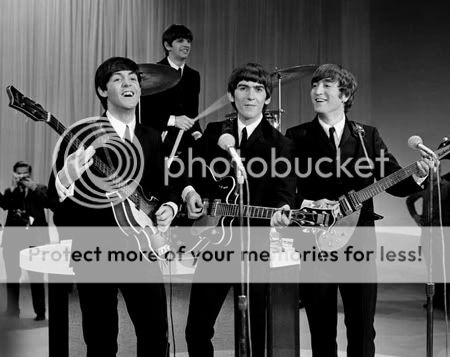
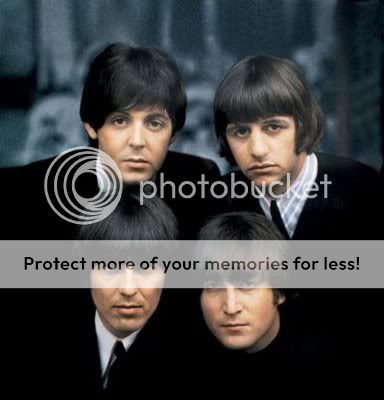
The impact of the Beatles — not only on rock & roll but on all of Western culture — is simply incalculable. As musicians, the Beatles proved that rock & roll could embrace a limitless variety of harmonies, structures, and sounds; virtually every rock experiment has some precedent on Beatles records. As a unit the Beatles were a musically synergistic combination: Paul McCartney's melodic bass lines, Ringo Starr's slaphappy no-rolls drumming, George Harrison's rockabilly-style guitar leads, John Lennon's assertive rhythm guitar — and their four fervent voices. One of the first rock groups to write most of its own material, the Beatles inaugurated the era of self-contained bands and forever centralized pop. And as personalities, they defined and incarnated '60s style: smart, idealistic, playful, irreverent, eclectic. Their music, from the not-so-simple love songs they started with to their later perfectionistic studio extravaganzas, set new standards for both commercial and artistic success in pop. Although many of their sales and attendance records have since been surpassed, no group has so radically transformed the sound and significance of rock & roll. At the dawn of the 21st century, a chart-topping collection of the Beatles #1 hits, 1, was well on its way to becoming one of the best-selling albums of all time.

Lennon was performing with his amateur skiffle group the Quarrymen at a church picnic on July 6, 1957, in the Liverpool suburb of Woolton when he met McCartney, whom he later invited to join his group; soon they were writing songs together, such as "The One After 909." By the year's end McCartney had convinced Lennon to let Harrison join their group, the name of which was changed to Johnny and the Moondogs in 1958. In 1960 an art-school friend of Lennon's, Stu Sutcliffe, became their bassist. Sutcliffe couldn't play a note but had recently sold one of his paintings for a considerable sum, which the group, now rechristened the Silver Beetles (from which "Silver" was dropped a few months later, and "Beetles" amended to "Beatles"), used to upgrade its equipment. Tommy Moore was their drummer until Pete Best replaced him in August 1960. Once Best had joined, the band made its first of four trips to Hamburg, Germany. In December Harrison was deported back to England for being underage and lacking a work permit, but by then their 30-set weeks on the stages of Hamburg beer houses had honed and strengthened their repertoire (mostly Chuck Berry, Little Richard, Carl Perkins, and Buddy Holly covers), and on February 21, 1961, they debuted at the Cavern club on Mathew Street in Liverpool, beginning a string of nearly 300 performances there over the next couple of years.

In April 1961 they again went to Hamburg, where Sutcliffe (the first of the Beatles to wear his hair in the long, shaggy style that came to be known as the Beatle haircut) left the group to become a painter, while McCartney switched from rhythm guitar to bass. The Beatles returned to Liverpool as a quartet in July. Sutcliffe died from a brain hemorrhage in Hamburg less than a year later.

The Beatles had been playing regularly to packed houses at the Cavern when they were spotted on November 9 by Brian Epstein (b. Sep. 19, 1934, Liverpool). After being discharged from the British Army on medical grounds, Epstein had attended the Royal Academy of Dramatic Art in London for a year before returning to Liverpool to manage his father's record store.

The request he received for a German import single entitled "My Bonnie" (which the Beatles had recorded a few months earlier in Hamburg, backing singer Tony Sheridan and billed as the Beat Brothers) convinced him to check out the group. Epstein was surprised to discover not only that the Beatles weren't German but that they were one of the most popular local bands in Liverpool. Within two months he became their manager. Epstein cleaned up their act, eventually replacing black leather jackets, tight jeans, and pompadours with collarless gray Pierre Cardin suits and mildly androgynous haircuts.

Epstein tried landing the Beatles a record contract, but nearly every label in Europe rejected the group. In May 1962, however, producer George Martin (b. Jan. 3, 1926, North London, Eng.) signed the group to EMI's Parlophone subsidiary. Pete Best, then considered the group's undisputed sex symbol, was asked to leave the group on August 16, 1962, and Ringo Starr, drummer with a popular Liverpool group, Rory Storm and the Hurricanes, was added, just in time for the group's first recording session. On September 11 the Beatles cut two originals, "Love Me Do" b/w "P.S. I Love You," which became their first U.K. Top 20 hit in October. In early 1963 "Please Please Me" went to Number Two, and they recorded an album of the same name in one 10-hour session on February 11, 1963. With the success of their third English single, "From Me to You" (Number One), the British record industry coined the term "Merseybeat" (after the river that runs through Liverpool) for groups such as the Beatles and Gerry and the Pacemakers, Billy J. Kramer and the Dakotas, and the Searchers. By mid-year the Beatles were given billing over Roy Orbison on a national tour, and the hysterical outbreaks of Beatlemania had begun. Following their first tour of Europe in October, they moved to London with Epstein. Constantly mobbed by screaming fans, the Beatles required police protection almost any time they were seen in public. Late in the year "She Loves You" became the biggest-selling single in British history (in the years since, only six other singles have sold more copies there). In November 1963 the group performed before the Queen Mother at the Royal Command Variety Performance.

EMI's American label, Capitol, had not released the group's 1963 records (which Martin licensed to independents like Vee-Jay and Swan with little success) but was finally persuaded to release its fourth single, "I Want to Hold Your Hand," and Meet the Beatles (identical to the Beatles' second British album, With the Beatles) in January 1964 and to invest $50,000 in promotion for the then unknown British act. The album and the single became the Beatles' first U.S. chart-toppers. On February 7 screaming mobs met them at New York City's Kennedy Airport, and more than 70 million people watched each of their appearances on The Ed Sullivan Show on February 9 and 16. In April 1964 "Can't Buy Me Love" became the first record to top American and British charts simultaneously, and that same month the Beatles held the top five positions on Billboard singles chart ("Can't Buy Me Love," "Twist and Shout," "She Loves You," "I Want to Hold Your Hand," "Please Please Me").

Their first movie, A Hard Day's Night (directed by Richard Lester), opened in America in August; it grossed $1.3 million in its first week. The band was aggressively merchandised - Beatle wigs, Beatle clothes, Beatle dolls, lunch boxes, a cartoon series — from which, because of Epstein's ineptitude at business, the band made surprisingly little money. The Beatles also opened the American market to such British Invasion groups as the Dave Clark Five, the Rolling Stones, and the Kinks.

By 1965 Lennon and McCartney rarely wrote songs together, although by contractual and personal agreement songs by either of them were credited to both. The Beatles toured Europe, North America, the Far East, and Australia that year. Their second movie, Help! (also directed by Lester), was filmed in England, Austria, and the Bahamas in the spring and opened in the U.S. in August. On August 15 they performed to 55,600 fans at New York's Shea Stadium, setting a record for largest concert audience. McCartney's "Yesterday" (Number One, 1965) would become one of the most often covered songs ever written. In June the Queen of England had announced that the Beatles would be awarded the MBE (Member of the Order of the British Empire). The announcement sparked some controversy — some MBE holders returned their medal — but on October 26, 1965, the ceremony took place at Buckingham Palace. (Lennon returned his medal in 1969 as an antiwar gesture. Interestingly, even though he rejected the medal, the honor itself cannot be returned; Lennon technically remained an MBE.)

With 1965's Rubber Soul, the Beatles' ambitions began to extend beyond love songs and pop formulas. Their success led adults to consider them, along with Bob Dylan, spokesmen for youth culture, and their lyrics grew more poetic and somewhat more political. In summer 1966 controversy erupted when a remark Lennon had made to a British newspaper reporter months before was widely reported in the U.S. The quote — "Christianity will go. It will vanish and shrink. I needn't argue with that; I'm right and will be proved right. We're more popular than Jesus now" — incited denunciations and Beatles record bonfires. The anti-Beatles backlash was particularly intense in the U.S., where the group was set to begin a tour just two weeks after the controversy erupted, and included death threats against the group. Largely out of concern for the safety of his fellow band members, Lennon apologized at a Chicago press conference.

The Beatles gave up touring after an August 29, 1966, concert at San Francisco's Candlestick Park and made the rest of their music in the studio, where they had begun to experiment with exotic instrumentation ("Norwegian Wood," 1965, had featured sitar) and tape abstractions such as the reversed tracks on "Rain." "Strawberry Fields Forever," part of a double-sided single released in February 1967 to fill the unusually long gap between albums, featured an astonishing display of electronically altered sounds and hinted at what was to come. With "Taxman" and "Love You To" on Revolver, Harrison began to emerge as a songwriter.

It took four months and $75,000 to record Sgt. Pepper's Lonely Hearts Club Band using a then state-of-the-art four-track tape recorder and building each cut layer by layer. Released in June 1967, it was hailed as serious art for its "concept" and its range of styles and sounds, a lexicon of pop and electronic noises; such songs as "Lucy in the Sky With Diamonds" and "A Day in the Life" were carefully examined for hidden meanings. The album spent 15 weeks at Number One (longer than any of their others) and has sold over 8 million copies. On June 25, 1967, the Beatles recorded their new single, "All You Need Is Love," before an international television audience of 400 million, as part of a broadcast called Our World. On August 27, 1967 - while the four were in Wales beginning their six-month involvement with Transcendental Meditation and the Maharishi Mahesh Yogi (which took them to India for two months in early 1968) — Epstein died alone in his London flat from an overdose of sleeping pills, later ruled accidental. Shaken by Epstein's death, the Beatles retrenched under McCartney's leadership in the fall and filmed Magical Mystery Tour, which was aired by BBC-TV on December 26, 1967, and later released in the U.S. as a feature film. Although the telefilm was panned by British critics, fans, and Queen Elizabeth herself, the soundtrack album contained their most cryptic work yet in "I Am the Walrus," a Lennon composition.

As the Beatles' late-1967 single "Hello Goodbye" went to Number One in both the U.S. and Britain, the group launched the Apple clothes boutique in London. McCartney called the retail effort "Western communism"; the boutique closed in July 1968. Like their next effort, Apple Corps Ltd. (formed in January 1968 and including Apple Records, which signed James Taylor, Mary Hopkin, and Badfinger), it was plagued by mismanagement. In July the group faced its last hysterical crowds at the premiere of Yellow Submarine, an animated film by Czech avant-garde designer and artist Heinz Edelmann featuring four new Beatles songs; a revised soundtrack featuring nine extra songs was released in 1999 (Number 15). In August they released McCartney's "Hey Jude" (Number One), backed by Lennon's "Revolution" (Number 12), which sold over 6 million copies before the end of 1968 — their most popular single. Meanwhile, the group had been working on the double album The Beatles (frequently called the White Album), which showed their divergent directions. The rifts were artistic — Lennon moving toward brutal confessionals, McCartney leaning toward pop melodies, Harrison immersed in Eastern spirituality — and personal, as Lennon drew closer to his wife-to-be, Yoko Ono. Lennon and Ono's Two Virgins (with its full frontal and back nude cover photos) was released the same month as The Beatles and stirred up so much outrage that the LP had to be sold wrapped in brown paper. (The Beatles, went to Number One, Two Virgins peaked at Number 124.)

The Beatles attempted to smooth over their differences in early 1969 at filmed recording sessions. When the project fell apart hundreds of hours of studio time later, no one could face editing the tapes (a project that eventually fell to record producer Phil Spector), and "Get Back" (Number One, 1969) was the only immediate release. Released in spring 1970, Let It Be is essentially a documentary of their breakup, including an impromptu January 30, 1969, rooftop concert at Apple Corps headquarters, their last public performance as the Beatles.

By spring 1969 Apple was losing thousands of pounds each week. Over McCartney's objections, the other three brought in manager Allen Klein to straighten things out; one of his first actions was to package nonalbum singles as Hey Jude. With money matters temporarily out of mind, the four joined forces in July and August 1969 to record Abbey Road, featuring an extended suite as well as more hits, including Harrison's much-covered "Something" (Number Three, 1969). While its release that fall spurred a "Paul Is Dead" rumor based on clues supposedly left throughout their work, Abbey Road became the Beatles' best-selling album, at 9 million copies. Meanwhile, internal bickering persisted. In September Lennon told the others, "I'm leaving the group. I've had enough. I want a divorce." But he was persuaded to keep quiet while their business affairs were untangled. On April 10, 1970, McCartney released his first solo album and publicly announced the end of the Beatles. At the same time, Let It Be finally surfaced, becoming the group's 14th Number One album (a postbreakup compilation would become their 15th in 1973) and yielding the Beatles' 18th and 19th chart-topping singles, "Let It Be" and "The Long and Winding Road."

Throughout the '70s, as repackages of Beatles music continued to sell, the four were hounded by bids and pleas for a reunion. Lennon's murder by a mentally disturbed fan on December 8, 1980, ended those speculations. In 1988 the Beatles were inducted into the Rock and Roll Hall of Fame. McCartney, citing business conflicts with the two other surviving members, did not attend. Relations between him and Harrison, in particular, had been strained for some time.

In January 1994 Goldmine magazine reported that McCartney, Harrison, and Starr had begun recording music for a long-rumored Beatles documentary the previous August, with more secret sessions scheduled. There were other signs that the three band members were on the mend — when Lennon was inducted to the Rock and Roll Hall of Fame as a solo artist in 1994, for instance, McCartney did the honors (McCartney himself was inducted in 1999). Later in 1994 Live at the BBC was released, featuring 56 songs the Beatles performed on the British radio between 1962 and 1965. It debuted at Number One in the U.K.; in the U.S., it debuted and peaked at Number Three.

The Beatles Anthology, the long-awaited six-hour television special, was broadcast over three nights in November 1995, coinciding with the release of the George Martin-compiled double-CD Anthology 1 (Number One), which featured alternate takes, demos, and rare tracks, and premiered the first new song by John, Paul, George, and Ringo since 1970. "Free as a Bird" (Number Six, 1995), a demo recorded by Lennon in 1977, was completed by the other three and produced by Jeff Lynne; it became the Beatles 34th Top 10 single. Lennon's lyrics didn't extend much beyond the title, and so Harrison and McCartney collaborated on lyrics for a new bridge. Two additional double CDs, Anthology 2 and 3 (both Number One), followed in 1996, as well as an extended videotape version of the documentary. Anthology 2's "Real Love" (again a Lennon demo, from 1979, with modern additions by the others) reached Number 11 and became the group's 23rd gold single (the most of any group).

The Liverpool juggernaut continued to roll on in 2000: the Beatles became the highest certified act of all time, with over 113 million albums sold in America (which grew to 170 million albums in 2008); a coffee table book, The Beatles Anthology, topped the New York Times bestseller list; and 1, a collection of the band's Number One hit songs, became the Beatles’ 19th chart-topping album, selling 25 million copies by 2005.

On November 29, 2001, George Harrison, diagnosed with lung cancer in the late 1990s, became the second Beatle to pass away. Three years later Capitol Records released all of the Beatles' U.S. albums (in both stereo and original mono versions) as two box sets, The Capitol Albums, Vols. 1 and 2. In 2006, George Martin and his son Giles produced a set of Beatles remixes, Love, for the soundtrack to Cirque du Soleil’s theater production of the same name. The following year, McCartney and Starr appeared on CNN's Larry King Live to talk about the project; they joined Beatles widows Ono and Olivia Harrison in Las Vegas to celebrate the Love production’s first anniversary.

Until 2007, the Beatles' Apple Corp. was in legal limbo with the Apple, Inc. computer company over use of the name. Apple Corp. had sued Apple, Inc. after the computer company opened its online iTunes music store; one result of the suit was that the Beatles' group and solo music was not made available for digital download. In February 2007, the two sides came to an agreement. Apple, Inc. would retain ownership of the name and license it back to the Apple Corp. record label. By October, all of the Beatles’ solo works were available on iTunes, and McCartney had told Billboard.com he expected the Beatles' group catalog to go online in 2008. [See also: George Harrison; John Lennon and Yoko Ono; Paul McCartney; Ringo Starr.]

Taken From : http://www.rollingstone.com/artists/thebeatles/biography
Read More...!

My Chemical Romance Biography

Posted on February 28, 2009 by Cak RaYZa


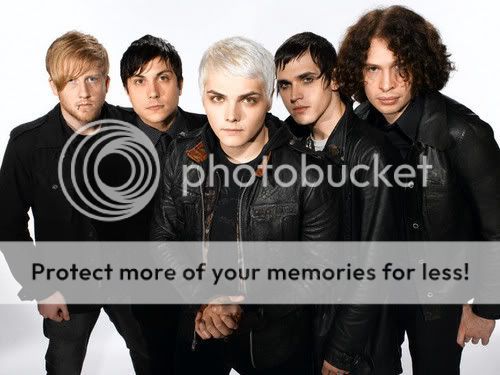
In the new millennium My Chemical Romance brought the angsty punk sub-genre known as "emo" to the mainstream masses. With a sound and lyrical content fusing the teenage rage of early hardcore acts like Minor Threat with the gloomy introspection of the Cure and the Smiths and the over-the-top theatrics of Seventies arena bands like Queen, MCR became the Top Ten's first emo superheroes within three years of forming.

The idea of rock superheroes is key to the band's success: Singer Gerard Arthur Way graduated from the School of Visual Arts in New York City in 1999 and was working as a comic-book animator when the terror attacks of September 11, 2001 made him to rethink his priorities. Deciding comic books were getting him nowhere, Way quit his day job and along with high school friend and drummer Matt Pelissier formed My Chemical Romance. The band was named after the Irvine Welsh book Ecstasy: Three Tales of Chemical Romance and its early- lineup was fleshed out by Way's younger brother "Mikey" on bass, Ray Toro on lead guitar, and Frank Iero on rhythm guitar.

Within three-months of forming My Chemical Romance had recorded and released their 2002 debut I Brought You My Bullets, You Brought Me Your Love on New Jersey indie label Eyeball Records (who had also signed fellow Garden State emo rockers Thursday). On the strength of tracks like the pummeling 9-11 lament "Skylines and Turnstiles," the band quickly signed to Reprise Records. 2003's Three Cheers for Sweet Revenge (Number 28, 2005) produced a string of singles including "I'm Not Okay (I Promise)" (Number Four Modern Rock, 2005), "Helena" (Number 11 Modern Rock, Number 31 Pop, 2005) and "The Ghost of You" (Number 9 Modern Rock, 2005) and sold over a million copies. MCR was one of the first bands to successfully pioneer the social networking website MySpace to market their music.

In 2004 Bob Bryar, a sound tech for the Used, replaced Matt Pelissie (who later opened Strong Arm Studios, in Harrison, NJ.)on drums. MCR spent much of 2005 on the road opening for Green Day and co-headlining the Warped Tour with Fall Out Boy. In 2006, as MCR was heading back into the studio to record its third album, the group released the CD/DVD Life on the Murder Scene, a documentary that included videos and live footage and sold 2 million copies.

In 2006 MCR released its most ambitious album to date: a bombastic concept album entitled The Black Parade, which sold 240,000 copies in its first week and propelled it to Number Two on the Top 200 Chart . The album's storyline revolves around the regretful reminiscences of a dying cancer patient (and includes a cameo from Liza Minnelli on "Mama"). The Black Parade polarized critics who either loved the album's grandiosity or hated its excesses though it too went platinum. Its singles included the Top Forty hits "Welcome to the Black Parade" (Number One Modern Rock, Number Nine pop, 2006) and "Teenagers" (Number 13 Modern Rock, Number 39 Pop 100, 2007).

In the spring of 2008 the band was enmeshed in a controversy after a British MCR fan committed suicide and U.K. tabloids labeled emo and the band a "suicide cult." The band released the following statement on its website: "My Chemical Romance are and always have been vocally anti-violence and anti-suicide. As a band we have always made it one of our missions through our actions to provide comfort, support, and solace to our fans...If you or anyone you know have feelings of depression or suicide, we urge you to find your way and your voice to deal with these feelings positively."

In July of 2008 the band released its second live CD/DVD compilation entitled The Black Parade is Dead! featuring outtakes from the band's fall 2007 Mexico City and New Jersey concerts.

Taken From : http://www.rollingstone.com/artists/mychemicalromance/biography
Read More...!

Nirvana Biography

Posted on February 27, 2009 by Cak RaYZa


Nirvana is widely credited with bringing the sound and spirit of late-'70s punk rock to a mainstream pop audience. In 1991 the Seattle-based trio took the angry, nihilistic message of the Sex Pistols' landmark 1977 single "Anarchy in the U.K." to #6 (#1 Modern Rock) with its own sarcastic blueprint for frustration, "Smells Like Teen Spirit." Nirvana's reign was tragically cut short slightly more than two years later, on April 5, 1994, when leader Kurt Cobain took his own life following at least one earlier suicide attempt and severe bouts with drug addiction, a chronic stomach ailment, and depression. He was 27.

Kurt Cobain and Krist Novoselic grew up in Aberdeen, Washington, a small logging town 100 miles southwest of Seattle. When Cobain was eight, his secretary mother and auto-mechanic father divorced, leaving him constantly moving from one set of relatives to another. As a child he loved the Beatles, but by nine discovered the heavier music of Led Zeppelin, Black Sabbath, and Kiss. Cobain met the 6-foot-7-inch Novoselic, son of a local hairdresser, through mutual friend Buzz Osborne of the Aberdeen band the Melvins. Osborne introduced them to the hardcore punk of Black Flag and Flipper.

In 1987 Cobain and Novoselic, both of whom had long felt alienated from their working-class peers, formed Nirvana and started playing parties at the liberal Evergreen State College in nearby Olympia. The following year, Seattle independent label Sub Pop signed the band and released its first single, “Love Buzz” b/w “Big Cheese.” Nirvana’s debut album, Bleach, recorded for $606.17, came out in 1989 to kudos from the underground-rock community; it sold an initial 35,000 copies, considerable for an indie-label release. The next year, Nirvana put out another Sub Pop single, “Sliver” b/w “Dive,” and recorded six new songs (including “Smells Like Teen Spirit”) with producer Butch Vig. Although opposed to major labels in principle, the band claimed it shopped the songs to bigger companies in hopes of getting the message of punk to a larger audience.

A major-label bidding war ensued, with DGC ultimately offering the group a $287,000 advance (rumors had it at $750,000). With Nevermind, Nirvana succeeded at getting punk to the populace on a grand scale: After an initial shipment of 50,000 copies, the record kept selling, eventually bumping new albums by Michael Jackson, Garth Brooks, U2, and MC Hammer from the top of the chart. Nevermind ultimately sold 10 million copies in the U.S. alone; it also produced another hit, “Come as You Are” (#32, 1992). In the wake of that success, Cobain explored a few pet projects, including performing frayed guitar feedback on William Burroughs’ The “Priest” They Called Him spoken-word CD and coproducing the Melvins’ Houdini album.

By early 1992, Nirvana’s success was biting back. As “Smells Like Teen Spirit” continued climbing up the charts, Cobain began bemoaning the group’s meteoric rise, worrying that fans were missing the point of Nirvana’s antiestablishment message. Simultaneously, his new relationship with Courtney Love, singer of the band Hole [see entry], had become a hot topic in the gossip columns. The couple married on February 24. When Love became pregnant with Cobain’s child and was quoted in a Vanity Fair article as admitting she had used heroin during the pregnancy, news of the couple’s alleged drug addiction hit the media fan. Scrutiny of the Cobain-Love affair reached a level of intensity matched in the pop world only by John Lennon and Yoko Ono, or the fated punk couple Sid Vicious and Nancy Spungen. On August 18, 1992, the Cobains delivered a healthy seven-pound baby, Frances Bean (named after the tormented, lobotomized ’40s film actress Frances Farmer). After a battle with children’s services in L.A., which challenged the Cobain’s parental fitness based on Love’s comments in Vanity Fair, the couple was granted custody of the child. Amid the chaos, Nirvana released Incesticide, a collection of early singles and outtakes. Beginning in spring of 1993, a series of events occurred that foreshadowed the demise of Cobain and Nirvana. On May 2, the singer overdosed on heroin at his Seattle home. The following month, he was charged with domestic assault after Love summoned the police during an argument over Cobain’s gun collection. On July 23, Cobain overdosed again, this time in the bathroom of a New York hotel room before a Nirvana show at the Roseland Ballroom.

On September 21, Nirvana released In Utero, which debuted at #1 and ultimately produced the Modern Rock radio hits “Heart-Shaped Box” and “All Apologies.” On January 7, 1994, Nirvana performed what would be their last American concert, at the Seattle Center Arena. On February 6, the band departed for a European tour, but after a series of shows in France, Portugal, the former Yugoslavia, Germany, and Italy, decided to take a break, during which Cobain remained in Rome. At 6:30 a.m. on March 4, Love found Cobain unconscious in the couple’s room at Rome’s Excelsior Hotel, the result of an overdose of the tranquilizer Rohypnol. At first deemed an accident, later reports uncovered a suicide note. Cobain remained in a coma for 20 hours. When the Cobains returned to Seattle, things took a turn for the worse. On March 18, police arrived at the Cobain home again after the singer locked himself in a room with a .38-caliber revolver, threatening to kill himself.

On March 30, Cobain checked in to the Exodus Recovery Center in L.A., but fled on April 1, after telling staff members he was going outside for a smoke. On April 8, he was found dead in a room above the garage of the couple’s Seattle home, the result of a self-inflicted .20-gauge shotgun wound to his head. For weeks afterward, fans, the news media, MTV, and radio mourned his death with specials about Nirvana and the generations they inspired. In November 1994, MTV Unplugged in New York, an album of the acoustic show taped in 1993, was released.

Novoselic and Grohl made a post-Nirvana performance appearance together in 1994 in Olympia, Washington, where they joined the Stinky Puffs onstage for a set that included the Puffs’ “I Love You Anyway,” a song for Cobain. Grohl soon found success leading his new band the Foo Fighters [see entry], and with Novoselic gathered 16 live Nirvana performances recorded between 1989 and 1994 for From the Muddy Banks of the Wishkah. While Novoselic turned to alcohol in the months after Cobain’s suicide, he eventually stopped drinking and formed a political action committee (JAMPAC, for Joint Artists and Music Promotions Political Action Committee) to battle censorship. In 1994 he picked up a guitar and joined Venezuela-born singer-bassist Yva Las Vegas for the short-lived band Sweet 75, which released a self-titled album on Geffen in 1997. Novoselic occasionally played with a band called Sunshine Cake, but by decade’s end, most of his energy was spent on political activism, performing with Soundgarden’s Kim Thayil and Dead Kennedys founder Jello Biafra as the No WTO Combo during protests against the World Trade Organization’s 1999 gathering in Seattle; a live album, Live From the Battle in Seattle, was released by Biafra’s Alternative Tentacles label in 2000.

Nirvana’s success changed the course of rock music in the ’90s, cementing the rise of alternative rock and legitimizing the differences in perspective between the earlier baby-boom generation of rock fans and the subsequent so-called Generation X. The band’s impact was also felt by some of Cobain’s own musical heroes, heard in such Cobain tributes as Neil Young’s Sleeps With Angels album and Patti Smith’s song “About a Boy.” Cobain’s expressions of support for women and homosexuals challenged the earlier rock & roll status quo. With his sensitive lyrics and outward frustrations over the disordered state of the world, Cobain brought a new edge and urgency to pop music. After years of legal-wrangling, With The Lights Out was released, exposing a box-set collection of the band's rawest demos and studio outakes in November 2004.

from The Rolling Stone Encyclopedia of Rock & Roll (Simon & Schuster, 2001)

Taken From : http://www.rollingstone.com/artists/nirvana/biography
Read More...!

Rihanna Biography

Posted on February 25, 2009 by Cak RaYZa


At the young age of 19, Rihanna, the Barbados-born beauty, has already earned the coveted title of international superstar. In just three short years, Rihanna has helped define the path of popular music, accrued multiple #1 hits, two MTV Video Music Awards and three Billboard Awards along her way. In addition to her mind blowing musical successes, Rihanna created a charity organization for impoverished children and has signed on to endorse a wide variety of multi-billion dollar companies including Venus Gillette, Nike and Secret. Most recently, Rihanna was asked to join the ranks of musical icons such as Queen Latifah and Faith Hill as the new face of CoverGirl Cosmetics.

While it may be hard to imagine, just four years ago, Rihanna was a young girl living in the beautiful Barbados parish of Saint Michael. Her first connection to the music industry came when she met a vacationing music producer named Evan Rogers from New York City. After an impromptu performance for Evan, he was absolutely certain she would one day make history. Soon after, Evan and Rihanna traveled to the Big Apple in search of a record deal. It took just one meeting with Jay-Z for Rihanna to score her big break. Jay, who had just recently been appointed the President of Def Jam Records, was so taken by the young singer's arresting natural talent that he signed her to the legendary label on the spot.

In 2005, Def Jam released Rihanna's dynamic debut album, Music of the Sun, which garnered much attention due to the popularity of her highly addictive dancehall flavored first single, "Pon de Replay". A year later, Rihanna released her platinum-selling second album, A Girl Like Me, featuring the #1 singles, "SOS" and "Unfaithful".

With two successful albums under her belt in just two years, Rihanna dropped her third and most critically acclaimed LP, Good Girl Gone Bad in 2007. The album's first single, "Umbrella," was the undisputed number one pop song of the summer and dominated the pop, urban and crossover charts for eight weeks in the U.S. "Umbrella" was also the #1 single on the UK singles chart for eleven consecutive weeks and went on to win "Video of the Year" and "Monster Single of the Year" at the 2007 MTV Video Music Awards.

In the wake of the "Umbrella" phenomenon, Rihanna showcased her "rock & roll" side with the release of her second single, the electric guitar flavored, "Shut Up & Drive." With a cohesive collection of body rockin' tracks that include highly innovative production work from Timbaland and Tricky Stewart, along with the song writing prowess of Justin Timberlake and Ne-Yo, Good Girl Gone Bad has solidified Rihanna's position amongst the industry elite. In support of the album, Rihanna has embarked on an extensive European tour on the heels of being named "Best International Act" at the European MOBO Awards, as well as being nominated for four MTV Europe Music Awards including "Album of the Year."

When it comes to fashion, Rihanna has quickly become a style icon to young women everywhere. Everything from her cutting edge hair styles to her immaculate fashion sense are heavily monitored in the glossy pages of high fashion magazines worldwide. This past year, the multi-talented trendsetter walked the runway in Milan, Italy at the DSquared fashion show and has recently been affiliated with a number of other international designers including Giorgio Armani, Dolce & Gabana and Zac Posen.

After making an enormous impact on both the music and fashion worlds, Rihanna decided it was time to give back to the community that had given her such tremendous support from the beginning. In 2006, she created the non-profit organization, Believe, which is dedicated to providing medical services, school supplies and toys for children in need.

Rihanna's impressive discography and a growing collection of the music industry's most cherished awards has proven that this is only the beginning. With her beauty, fashion and business sense to match, the Island girl turned international superstar will continue to rock the world for years to come!

Taken From : http://rihannanow.com/
Read More...!

Air Supply Biography

Posted on by Cak RaYZa


In 1975, Graham Russell & Russell Hitchcock met on May 12th the first day of rehearsals for ‘Jesus Christ Superstar’ in Sydney, Australia. They became instant friends with their common love for the Beatles and of course singing.

After the shows performance at 10:30, they would play pizza parlors, coffee bars and night clubs with just one guitar and two voices. They quickly gained a reputation for great harmonies and for original songs that Graham was writing constantly. They made a demo on a cassette, of two songs, ‘Love and Other Bruises’ and ‘If You Knew Me’ and took it to every record company in Sydney. Everyone turned it down, but one - CBS Records who admired their unique style. They made a single in one afternoon and it shot to number one on the National charts. Air Supply was born! That same year, they opened for Rod Stewart across Australia and then throughout the US and Canada playing all the famous huge venues before Rod would take the stage. They found new fans, but did not break the US market.

Back in Australia they had to start again and made a record called ‘Life Support’. On this record were some treasures of songs, including ‘Lost in Love’ which went top 10 in Australia and somehow found its way to Clive Davis in New York.

Clive immediately signed Air Supply to Arista Records and in 1980, ‘Lost in Love’ became the fastest selling single in the world and leaped to the top of the all the charts. Now Air Supply were on their way. The second single was ‘All Out of Love’ and that went up the charts even quicker. Seven top-five singles later, Air Supply at that time had equaled the Beatle’s run of consecutive top five singles. The albums ‘Lost in Love’, ‘The One That You Love’, ‘Now & Forever’ and ‘The Greatest Hits’ sold in excess of 20 million copies. ‘Lost in Love’ was named “song of the year” in 1980, and with the other singles sold over 10 million copies.

The trademark sound of Russell Hitchcock’s soaring tenor voice and Graham Russell’s simple yet majestic songs created a unique sound that would forever be known as Air Supply.

However, it was the live show that always held audiences captive around the world. They were the first western group to tour China, Taiwan and countless other countries, that before would not allow pop music into their borders. In 1983 they recorded ‘Making Love Out of Nothing at All’ by Jim Steinman which solidified the group as a permanent force in modern music. This song was released on “The Greatest Hits” album which soared past 7 million copies.

‘Lost in Love’, ‘All Out of Love’, ‘The One That You Love’, ‘Sweet Dreams’ and ‘Making Love Out of Nothing at All’ have each achieved multi-million plays on the radio.

In 1986 the group’s music was still played endlessly on radio. They began to tour in places that no-one had been before with lavish productions. In South America and Asia they became a part of everyone’s life. In 1989, they recorded ‘The Earth Is’ album selling over a million copies outside of the US. This album was followed by ‘The Vanishing Race’ CD and with the singles ‘Goodbye’ and ‘It’s Never Too Late’, again saw multi-platinum success. The following albums, ‘News from Nowhere’, ‘Yours Truly’, and ‘Across the Concrete Sky’ all gave their second greatest hits album multi-platinum status as they traveled the world each and every year.

In 2000 a new production company was founded to be devoted to all of Air Supply’s future product, called A Nice Pear, which gave them complete creative control.

In July 2005, their live DVD, ‘It Was 30 Years Ago Today’ celebrates 30 years of success around the world. In fall 2005 an acoustic DVD/CD will be released called ‘The Singer and the Song’. Their next studio CD is near to completion with all new and original songs that encompass a unique theatrical theme that will show a different side of Air Supply.

It was July 2005 that Air Supply smashed attendance records when in Cuba, at one show they played to 175,000 people.

Taken From :http://www.airsupplymusic.com/
Read More...!

Michael Learns To Rock Biography

Posted on February 24, 2009 by Cak RaYZa

The history of Michael Learns To Rock


With global record sales of more than 9 million units since the debut in 1991, the history of MLTR contains not only the story of one of the biggest international successes ever to come out of Denmark, it's also the tale of how exceptions often confirm the rule. As opposed to so many other international names, the road to MLTR's success has never been paved with scandals, divorces, drugs, or even extreme images of life on the edge – It's strictly about music. It's about the formidable talent for writing fine pop songs, about the indisputable qualities contained in the songs, and above all the ability to cut through all the noise with material that has earned the group a faithful following and dazzling record sales.

MLTR's music has been described as a Scandinavian glow that meets the international pop song, something which has been refined through the years by artists such as The Beatles, The Eagles, Elton John and Billy Joel. It's precisely the perfect balance of the two elements described above that has been instrumental in forming the compelling sound of the band and won MLTR millions of fans around the globe.

The whole saga begins quite modestly back in 1987 at a high school in Aarhus, Denmark. The singer and keyboard player Jascha Richter (b. 1963) forms a band with drummer Kåre Wanscher (b. 1969) and guitarist Mikkel Lentz (b. 1968) – a little café band. All three are huge music fans who were virtually fed the history of pop and rock with their mother's milk. They decide to create a more serious band after Jascha plays them a few songs he has written. In the spring of 1988 Søren Madsen (b. 1967), who's otherwise a guitarist, agrees to sit in on bass during a rehearsal one evening. Michael Learns To Rock becomes a reality. The group debuts in Aarhus in May 1988 and later in the summer enters the city's annual talent contest. MLTR scores a resounding victory, and at the same time lands a manager, J.P. Andersen, who is a member of the jury. Andersen immediately falls for the talent radiating out of this sparkling young quartet.

The following two years bring an intensive period of concert touring. The group plays everywhere in Denmark, adds new and better songs to the repertoire, gets tighter and tighter as a band, fine tunes the precise harmonies that give the band its signature sound – and along the way, lands a solid record contract. With the Danish producers Jens Hofman and Oli Poulsen working the dials, MLTR spends several months in the studio preparing for the September 1991 debut of the album MICHAEL LEARNS TO ROCK . Among other tracks, the set contains the hit ballad THE ACTOR a song that in January 1992 secures MLTR the pole position on the Danish album-sales chart. The song travels much faster than the band, and without MLTR even being there, it tops the charts in Norway, Sweden, Indonesia, Malaysia, Singapore and the Philippines. The period marks hectic times for MLTR. In 1992 they frantically tour Denmark – where they are the hottest thing going – and a number of countries in the Far East where their presence is a follow-up force to smashing successes the debut album has already achieved. Along the way Jascha Richter writes songs for a second album that gets a rush release in October 1993 under the title COLOURS .

Once again, it's the knack for creating the classic ballad that generates success. SLEEPING CHILD is the title of the song that sparks MLTR-mania. In the course of the next 18 months, the frenzy launches the band on a journey to many parts of the world and generates album sales far beyond the one-million mark. COLOURS is released in most of Europe and throughout the Far East, while SLEEPING CHILD and the singles that follow, 25 MINUTES and OUT OF THE BLUE land MLTR top slots on countless hitlists and earns the lads innumerable gold and platinum records. Fans in Thailand go berserk when the band arrives in Bangkok in November to perform for 12,000 followers at the Phoebus Concert Hall. And as the jubilant finale to a golden year, MLTR is given the prestigious RSH Award in Germany and at the SEA Grammy Awards in Singapore the band is named “The Best Performing Act of the Year.”

The year 1995 sees the release of MLTR's third album, PLAYED ON PEPPER . The number of international territories MLTR has conquered grows, putting the band is on top-priority lists in faraway places such as Brazil, South Africa, The United Emirates Republic, and no fewer than 11 countries in the Far East. It goes without saying that Scandinavia is on the bandwagon along with other European countries, including Germany, Italy, France and Switzerland where the album is released. In October of the same year MLTR embarks on their biggest tour of the Far East -- with 25 shows in 10 countries – where new hits like THAT'S WHY (YOU GO AWAY) and SOMEDAY become pearls on the string of hits that make up the setlist. PLAYED ON PEPPER ends up selling more than 1.2 million units, while in efforts to curb pirate copying of MLTR material, the band releases the best-of album, PAINT MY LOVE . The album is released exclusively in the Far East. The title track – and the accompanying video which touches the edges of censorship laws in some territories – reinforces MLTR's enormous popularity and indisputably makes the band the biggest name in countries such as Korea, Thailand and Malaysia. Down by the opposite pole, MLTR's popularity explodes in South Africa. Following a hectic four-day promo tour in July 1997, the band lands at the top of the country's hitlists . PAINT MY LOVE sells a whopping 3.4 million units worldwide. MLTR is chosen as headliner for the Celebrate Hong Kong Concert on 6 July 1997, the climax to festivities marking the transfer of Hong Kong to China.

While promoting PAINT MY LOVE on the international highways, MLTR squeezes in some time to record a fourth studio album NOTHING TO LOSE . The set is released in September 1997 while MLTR still has a firm foothold atop hitlists in the Far East as well as South Africa. The rocker SOMETHING YOU SHOULD KNOW helps pave the way for yet another success by the band. NOTHING TO LOSE logs sales of more than one million units and when the band heads off in January 1998 for a tour of South Africa to play sell-outs in Johannesburg and Pretoria, the critics write: “This is as good (if not better) a band as any current big name group out of America or the UK.”

Nine turbulent years takes its toll on the four musicians who decide to take a break from each other and from the world of pop music. But shortly thereafter, in the autumn of 1998, Jascha Richter has some new songs written. The single STRANGE FOREIGN BEAUTY is chosen as the trump card for a new retrospective album released under the fitting title, GREATEST HITS. The set contains a selection of top hits from the four previous albums, but the tracks have either been remixed, re-recorded or fine tuned in some way or another. Upon the album's 1999 release, MLTR once again lands at the summit of the Danish hitlist and opens the ears of music fans in new, untapped areas such as Portugal. Another million seller is added to the band's discography, and the success was achieved without any promotional work done in MLTR's main markets in the Far East.

When MLTR begins initial work for studio album number five in the spring of 2000, Søren Madsen decides to leave the group to try his hand at a solo carrier. Richter, Lentz and Wanscher opt to continue as a trio and that summer they head for the studio. As it has been for previous albums, the band decides once again not to hire a costly international star producer, but allies itself with the incredibly talented Danish musician, arranger and producer Boe Larsen. Uniting with the band, he and MLTR find a new musical direction and set some new challenges for themselves. The outcome is BLUE NIGHT – MLTR in the year 2000. A dozen new, sharply-profiled quality pop songs. The new tracks are a fine extension of what is already an impressive repertoire that may be postmarked in Denmark, but surely demonstrate how the most remote corner of the world is no more than a good song away.

BLUE NIGHT becomes another huge success for MLTR – sales come close to the platinum level at home and score successfully on Asian hitlists as well as the group's new found market in Sweden. In 2001 the band sets out on a five-week-long tour with stops in Dubai, the Philippines, Singapore, Thailand, Malaysia and China. Just before the tour kicks off, the compilation 19 LOVE SONGS – including the not previously released track GHOST OF YOU -- is released in Southeast Asia. (Danish release 2002). Before setting off on the tour the boys agree they will take a long break upon completion of the tour. The break allows Richter, Lentz and Wanscher a chance to pursue individual projects, one of which leads to Richter's solo album PLANET BLUE.

At the start of 2003, the band members gathered once again and began to plan their sixth album. It was released in February 2004 and titled: "Michael Learns To Rock".

Since this release the band has been concentrating on playing concerts around the world.

In Autumn 2005 Michael Learns To Rock recorded several shows in Asia and have recently released the CD “The Best Of Michael Learns To Rock Live”, containing two new studio tracks and 14 live tracks.

Taken From : http://mltr.dk/mltr
Read More...!

Recent Post